
How AI Search Engines Decide Which Brands to Recommend
- September 29, 2026
- Devavratha
- No Responses
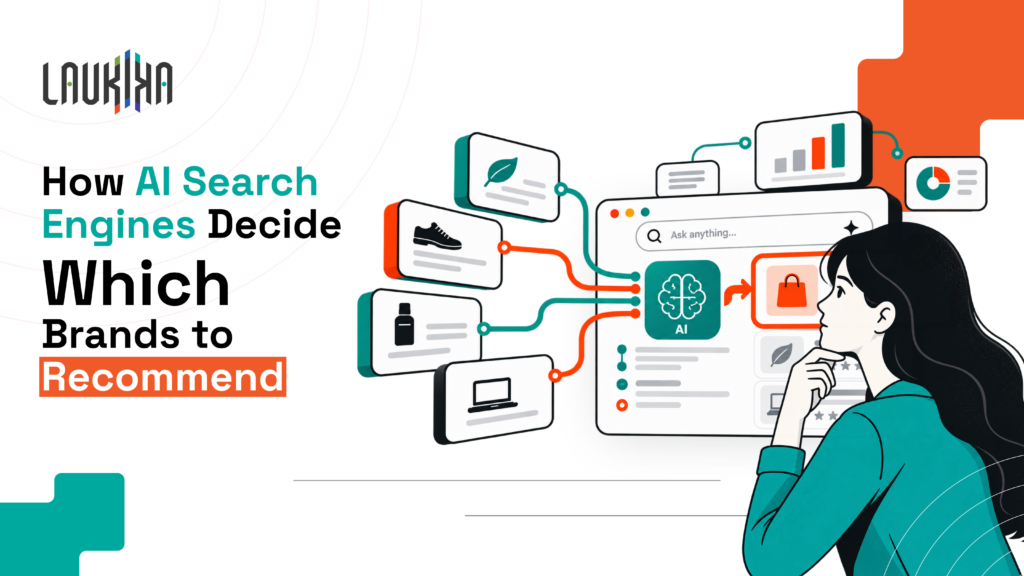
An AI search engine is changing how people find information in ways that are becoming hard to ignore. Instead of typing a query and working through a list of blue links, users can now ask questions naturally and receive direct answers, summaries, comparisons, and recommendations. This shift towards AI powered search is changing not just how people find information, but how they discover businesses and brands.
That raises an important question: when someone asks an AI search engine to recommend a product, service, or brand, how does it decide which names to mention? The answer goes beyond simply matching a search term with a webpage.
For brands, visibility needs to be looked at more broadly. Relevance still matters, but so do authority, useful content, credibility, and the consistency of information available online. Brands need a digital presence that is not only visible, but clear enough to understand and credible enough to reference.
What Is an AI Search Engine?
An AI search engine uses artificial intelligence to understand what a person is asking and provide a response based on relevant information. Traditional search engines have largely presented webpages for users to explore. AI search takes that further by bringing information together and presenting it as an answer, summary, comparison, or conversation.
The difference becomes clearer when a search has more than one layer of intent. Someone searching for the best accounting software for a small business also cares about price, ease of use, and team size. An AI based search engine interprets these details as part of the wider question rather than treating every word as an isolated keyword.
For brands, this changes what it means to be visible online. Ranking still matters, but a brand also needs to be understandable — search systems need to identify what the business does, who it serves, and how it relates to a topic. A clear website, useful content, and relevant external references all contribute to that understanding.
|
Traditional Search |
AI Search |
|---|---|
| Primarily presents links and webpages for users to explore. | Can provide direct answers, summaries, and comparisons. |
| Users often visit several pages to gather information. | Can bring information from multiple sources into one response. |
| Search has traditionally relied heavily on keywords and relevance. | Can interpret intent, context, and relationships between information. |
| Visibility often focuses on individual page rankings. | Broader brand relevance and digital presence can influence discovery. |
How AI Search Works
Understanding the User’s Search Intent
A search query often says less than the user actually means. Someone searching for “CRM for a small business” may want something affordable, simple, and suitable for a small team. AI systems try to understand this underlying intent instead of focusing only on the words used.
Finding Relevant Information
Once intent is understood, the system needs information to answer the question — webpages, product information, business profiles, reviews, and other sources. A detailed page that directly answers a question provides more value than one that simply contains the same phrase.
Understanding Relationships Between Information
AI search looks at how different pieces of information connect — a brand may be associated with a product, service, location, or area of expertise. Clear, consistent information makes these relationships easier to establish.
Generating an Answer Based on Multiple Signals
The final response is shaped by the information available and the context of the question. The result is not a fixed ranking — it’s a response built around the specific question and what the search engine AI can interpret.
What Signals Help AI Search Engines Understand a Brand?
Before an AI search engine can include a brand in a useful response, it first needs to understand that brand. What does it sell? Who does it serve? What topics is it associated with? The answers may come from the brand’s own website, but also from business listings, reviews, industry websites, and other sources.
No single signal guarantees that a brand will appear in an AI-generated response. AI search algorithms draw on a combination of information to build a broader understanding — improving visibility isn’t simply about producing more content, it’s about making the information around the brand accurate, useful, and connected.
Relevant and Useful Content
Content gives an AI search engine useful context about a business. Service pages, FAQs, guides, and case studies explain what a brand offers and the problems it solves. The strongest content starts with a real customer need rather than a keyword.
Brand Authority and Credibility
Authority is built over time through knowledge, experience, and evidence. Original research, expert commentary, and practical resources show a brand genuinely understands its subject. Publishing frequently doesn’t automatically create authority — consistently useful information does.
Consistent Information Across Digital Platforms
A business rarely appears in just one place online. Its website, business profile, social accounts, and directories may all contain information about it. Keeping the name, services, and location accurate helps an AI based search engine connect different references to the same brand.
Clear Brand Entities and Relationships
A brand needs a clear identity online. Its website should make it easy to understand what the business is, what it offers, who it serves, and where it operates — giving AI search algorithms more context when connecting a brand with a topic or customer need.
Mentions and References From Trusted Sources
What other credible sources say about a brand provides useful context — trade publications, independent reviews, or partner websites. A relevant reference from a trusted source tells an AI search engine more than many unrelated mentions.
How AI Search Engines Decide Which Brands to Recommend
Relevance to the User’s Query
The first question is whether the brand fits what the user is asking for — product, location, audience, budget, or specific problem. Businesses can make this clearer by explaining what they offer, who they serve, and which needs their products address.
Evidence That Supports the Brand
A recommendation is more useful when reliable information backs it — product details, service pages, reviews, or third-party coverage. What counts as useful evidence varies by industry.
Authority Within the Topic
A brand that consistently demonstrates expertise in a subject develops a stronger connection to that topic. A cybersecurity company publishing practical data-protection content signals more expertise than one that mentions cybersecurity once.
Consistency Across Multiple Sources
When key facts about a business stay consistent across many websites, the brand becomes easier to identify. Its name, services, location, and expertise should not contradict each other from one platform to another.
Context and Suitability for the Recommendation
Being relevant doesn’t automatically make a brand suitable for every user — someone choosing software may prioritise price over location. Brands can help by clearly communicating who their offering is for.
How Google Is Changing the Search Experience With AI
Google has been introducing more AI into its search experience, changing how people discover and explore information. Instead of every search ending with a list of webpages, some queries now produce AI-generated summaries and more conversational ways of exploring a subject.
From Traditional Search Results to AI-Generated Answers
Traditional Google Search gives users links and other results to explore. With Google search AI, certain queries can also produce generated answers that bring information from different sources together — useful for questions involving several connected ideas.
How Google AI Can Influence Brand Discovery
When Google’s AI systems interpret a question, information about relevant businesses may become part of the wider search experience. It’s not just about one page ranking well; Google needs enough clear information to understand what the brand offers.
Why Brands Need Visibility Beyond Traditional Rankings
Traditional rankings remain important, but the customer journey can now include summaries, comparisons, and follow-up questions. Useful content, accurate information, and credible external references all help create a more complete presence.
What Brands Can Do to Improve Their Visibility in AI Search
There is no guaranteed formula for getting a brand included in an AI-generated answer. A better approach is to build a digital presence that’s genuinely useful to customers while giving an AI search engine enough clear information to understand the business.
Build Content Around Real Customer Questions
Start with the questions customers actually ask — pricing, features, comparisons, or common problems. Build resources that answer these properly, rather than creating content because a keyword has search volume.
Strengthen Topical Authority
Build a connected body of content around the subjects a brand wants to be known for, rather than publishing unrelated topics just to attract traffic.
Make Important Brand Information Easy to Understand
Clearly explain what the business does, what it offers, who it serves, and where it operates. Clear headings and organised information make it easier for an AI search engine to interpret the site.
Maintain Consistent Information Across Digital Channels
Check business listings, social profiles, directories, and review platforms. Keeping the name, location, services, and contact details consistent reduces confusion.
Create Content That Answers Rather Than Only Targets Keywords
Keywords tell you what people search for, but not everything they need from an answer. Good content explains the subject and gives readers something useful to take away, rather than repeating the same phrase throughout a page.
AI Search Visibility Is Becoming Part of Brand Strategy
AI search visibility should not be treated as a separate marketing activity. At its core, it’s connected to how clearly a brand communicates what it does, what it knows, and who it serves — the same questions customers ask when researching a business.
Much of the work already associated with organic growth supports this shift. Content strategy answers customer questions. Technical SEO helps search systems access and understand website information. Authority-building creates opportunities for credible references, and accurate business profiles keep information consistent across platforms. This is why Generative Engine Optimization is increasingly treated as a natural extension of organic growth work rather than a separate discipline.
Brands can approach AI search as an extension of their existing organic growth strategy. Instead of trying to predict every change made by an AI driven search engine, businesses can focus on the things they can control: useful content, genuine expertise, technical quality, accurate information, and clear positioning.
Why AI Search Changes the Way Brands Think About Organic Growth
Traditional SEO has often focused on individual pages and the keywords they’re intended to rank for. With an AI search engine, brands have another reason to look at the bigger picture — not only whether one page appears for one query, but whether the wider online presence gives a clear picture of what the brand does.
Topical authority, useful content, brand entities, third-party references, and consistent information all contribute to this broader understanding. An article can explain a topic. A service page can describe an offering. A case study can demonstrate experience. Together, these different pieces create a clearer picture of the brand for customers and search engine AI systems.
Building a Brand That AI Search Engines Can Understand
Clear brand positioning is the starting point. A business should answer a few basic questions quickly: What is the brand? What does it offer? Who does it serve? Where does it operate? What is it known for? This matters especially when businesses have similar names or operate across multiple locations.
The website plays an important role in creating this clarity. Service pages, product information, expertise-led content, and case studies each add another piece to the overall picture. External references provide additional context, while accurate business listings reinforce key details.
These principles are useful beyond AI search too. They make information easier for customers to understand and provide a more durable foundation for organic growth.
What the Future of AI Search Means for Brands
AI-assisted search is still evolving. Search platforms are experimenting with conversational answers, follow-up questions, and new ways of connecting users with information. What remains important is having information that is relevant, useful, and trustworthy.
Rather than building a strategy around every new AI feature, brands can focus on creating digital assets with lasting value. Strong content, genuine expertise, accurate information, and credible references can support visibility across search experiences, including an AI driven search engine.
AI search should become part of a broader organic growth and brand visibility strategy. The goal isn’t to predict exactly what a platform will recommend – it’s to build a brand that is relevant, credible, and genuinely useful wherever people go to find information.
Frequently Asked Questions
What is an AI search engine?
How does an AI search engine decide which information to show?
It may consider the user’s intent, relevance, context, source quality, and supporting information. The exact process varies between platforms, and the information available to the system can influence what appears in the final response.
How do AI search engines decide which brands to recommend?
What is the difference between an AI search engine and a traditional search engine?
Traditional search generally presents webpages and other results for users to explore. An AI based search engine can interpret a question and generate a direct response by bringing relevant information from different sources together.
How can businesses improve their visibility in AI search?
Businesses can create useful content, answer real customer questions, demonstrate expertise, and maintain accurate information across digital platforms. Clear brand positioning and relevant external references can also strengthen visibility.
Does Google use AI in search?
Yes. Google uses artificial intelligence across its search technology and has introduced AI-powered search experiences. Google search AI can help generate responses and summaries for certain queries, although features and availability can change over time.
What role do AI search algorithms play in brand visibility?
AI search algorithms help interpret queries, identify relevant information, and shape responses. They may consider factors such as relevance, context, and source quality, although the exact systems used by each platform are different.
How can brands prepare for the future of AI search?
Brands can focus on clear positioning, useful content, technical SEO, accurate information, genuine expertise, and credible references. These fundamentals can help businesses adapt as AI driven search engines and other search experiences continue to evolve.
Recent Blogs

How Digital Marketing Can Help Design Colleges Build a Stronger Digital Presence
Choosing a design college rarely begins with an admission form. It often begins with a search. A student looks for
How AI Search Engines Decide Which Brands to Recommend
An AI search engine is changing how people find information in ways that are becoming hard to ignore. Instead of