
How Branding and Digital Storytelling Build Strong Entertainment Brands
- September 17, 2026
- Purnima
- No Responses
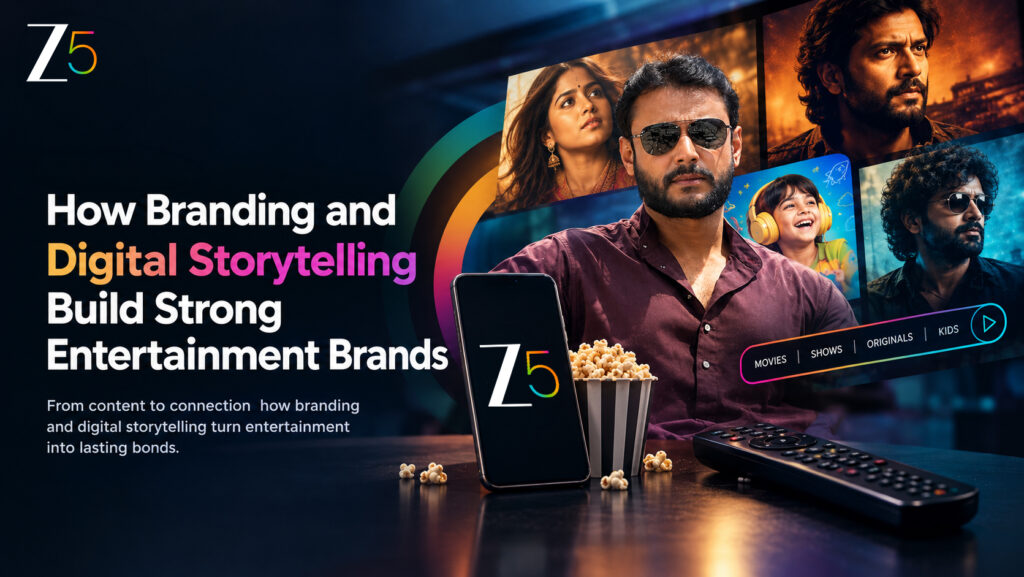
The entertainment landscape has never been more crowded. With OTT platforms, streaming services, television, social media and short-form video all competing for attention, audiences have more content to choose from than ever. A new release can attract attention today and disappear from the conversation tomorrow. For entertainment brands, the challenge is no longer just creating or distributing good content. It is about building a recognisable identity and using digital storytelling to turn individual content releases into meaningful brand experiences that audiences connect with, remember and return to.
That distinction matters because having a library of shows and movies does not automatically create a strong brand. Content may bring people in, but branding gives that content a recognisable identity, while storytelling gives the brand a meaningful way to communicate. Together, they help an entertainment platform move beyond individual releases and build a relationship with its audience over time. This is where the expertise of a branding agency in India can become valuable, particularly for brands trying to stay consistent while speaking to diverse audiences.
Zee 5 Kannada offers an interesting example of this relationship. As part of a larger entertainment platform operating across languages, genres and audience segments, it has to balance a common brand identity with the cultural character of Kannada entertainment. Its digital presence shows how branding and storytelling can work together to make regional entertainment feel distinctive while still belonging to a larger platform.
Why Entertainment Brands Need a Stronger Story Beyond Their Content
Individual shows, movies and releases are naturally designed to attract attention. A trailer can generate curiosity, a popular actor can create conversations and a new release can drive a spike in engagement. But the attention attached to a particular title does not necessarily transfer to the platform behind it.
Audiences may remember the movie they watched without remembering how the platform presented it or what made its overall brand distinctive. This creates an important difference between content visibility and brand recognition. Visibility is often tied to what is happening right now: a premiere, a trending scene, a campaign or a cultural moment. Brand recall develops more gradually. It comes from repeatedly experiencing familiar visual cues, a recognisable voice, a particular way of communicating and a consistent point of view.
The more these elements work together, the easier it becomes for audiences to recognise the brand even before they see its name. For entertainment brands, this means every communication has a role beyond promoting a single piece of content. A campaign, social post, reel or announcement should still feel connected to the larger brand. Consistency does not mean making every piece of content look identical. It means creating enough continuity for audiences to understand that all these different stories come from the same place.
Attention gets the audience in, but identity makes the brand memorable
A strong piece of content can earn attention because it is entertaining, emotional, timely or culturally relevant. But once that moment passes, brand identity is what remains. The colours, visual language, tone of voice, style of communication and overall personality audiences repeatedly encounter begin to form an association in their minds. Over time, these associations can make a platform feel familiar even when the individual content being promoted keeps changing.
Every piece of content contributes to the larger brand
An entertainment brand is built through hundreds of small interactions rather than one campaign alone. A poster, social caption, trailer, festival post, meme, announcement or short-form video all become part of the audience’s experience of the brand. When these pieces share a clear identity and point of view, individual communications stop functioning as isolated posts and start contributing to a larger brand narrative.
How Zee 5 Kannada Builds a Brand Across Diverse Entertainment Audiences
Regional entertainment requires a careful balance. The brand has to remain recognisable as part of a larger entertainment ecosystem while also speaking naturally to the audience it is addressing. Zee 5 Kannada provides a useful example of how this balance can shape digital communication. The challenge is not simply to present Kannada content, but to make the communication around that content feel native to the audience.
Creating one recognisable identity across multiple languages
A multilingual entertainment platform has to operate across very different linguistic and cultural environments. Each language comes with its own expressions, humour, references and communication habits. At the same time, the larger platform cannot afford to feel like a collection of completely unrelated regional brands. There needs to be a shared identity underneath the differences.
This is where strategic branding becomes important. The language of a post can change, the cultural references can change and the creative treatment can respond to the audience, but certain brand cues can remain consistent. The result is a regional expression that feels specific without losing its connection to the larger platform. It is a useful model for brands trying to balance localisation with a unified identity.
Making regional storytelling feel culturally relevant
Localisation is much more than translating a sentence from one language to another. A piece of communication can be grammatically correct and still feel completely disconnected from the people it is intended for. Effective regional storytelling understands the references audiences already know, the humour they respond to, the cultural moments they participate in and the way they naturally speak about entertainment. For Kannada audiences, this can mean drawing from familiar cultural contexts, local expressions, entertainment habits and the emotional relationship audiences have with Kannada cinema and television. The objective is not to add regional elements simply to make a post look local. It is to start with the audience and create communication that feels like it belongs in their world.
Maintaining consistency across social and digital formats
Entertainment brands communicate through many formats, from static creatives and posters to reels, trailers, carousels, motion graphics and promotional campaigns. Each format has a different job, but the brand should remain recognisable across all of them. Consistent typography, visual cues, tone, language and storytelling principles help create that continuity. This is particularly important on social media, where audiences often encounter a brand without actively looking for it. A recognisable visual and verbal style can create familiarity even when the subject of the post changes completely.
Where Branding Ends and Digital Storytelling Begins
Branding and digital storytelling are closely connected, but they solve different parts of the communication problem. Branding establishes who the brand is and how it should be perceived. Storytelling determines how that identity comes alive in communication. For an entertainment brand, the difference becomes especially important because the subject matter is constantly changing.
Branding creates recognition
Branding creates the framework through which audiences recognise and understand a brand. It includes the visual identity, brand voice, consistency, positioning and the perception the brand wants to build. For an entertainment platform, this framework helps answer a simple question: when audiences encounter this communication, what should they immediately associate it with? A strong brand identity makes that recognition easier across campaigns, platforms and content categories.
Storytelling gives the brand something to say
A brand identity by itself cannot carry every communication. It needs ideas and stories that give it relevance. Digital storytelling brings that identity into the everyday moments audiences care about. It can turn a new release into a conversation, a cultural occasion into a brand moment or a character into a relatable social idea. This is particularly useful for entertainment brands because their raw material is already rich with stories, characters, emotions and cultural references. The role of digital storytelling is to find the right way to translate those elements into communication that audiences want to engage with rather than simply another promotional message.
The two work together to create brand recall
Branding without storytelling can become repetitive, while storytelling without branding can feel disconnected from the larger identity. When the two work together, the brand remains recognisable even as its stories keep changing. The audience gets both familiarity and freshness: they know who is speaking, but they still have a reason to listen.
How Digital Storytelling Turns Entertainment Moments Into Brand Experiences
The most effective entertainment communication often starts before anyone decides what format it should take. A reel is not an idea by itself, just as a carousel is not a strategy. The stronger approach is to identify what the audience should feel, understand or respond to first, and then choose the format that best delivers that idea.
Start with the audience insight
An audience insight can be as simple as a familiar behaviour, an emotional response to a character, a cultural observation or the way people talk about a particular kind of content. Starting here prevents the creative process from becoming format-led. Instead of asking, “What reel can we make?”, the better question is, “What is interesting about this audience or moment that we can say something about?” Once that is clear, the format becomes a tool rather than the starting point.
Find the central creative idea
A strong creative idea gives a campaign something to build around. It can turn one entertainment moment into several connected pieces of communication without making them feel repetitive. For example, a new show may inspire a larger thought around its characters, relationships, conflicts or audience reactions rather than limiting communication to release information. The value of a central idea is that it provides direction. Copy, visuals, video treatments and social executions can all interpret the same thought in different ways. This creates a campaign that feels connected rather than like a collection of unrelated posts.
Adapt one idea across multiple formats
Once the central idea is established, it can be adapted according to where and how the audience will encounter it.
- Static creatives
- Posters
- Carousels
- Short-form videos
- Reels
- Motion-led content
The execution can change significantly from one format to another. A static post may communicate the thought through a single visual, while a reel can build it through pacing, dialogue, performance or editing. What remains consistent is the underlying idea.
Keep the brand voice consistent while the story changes
Entertainment brands need room to be playful one day, emotional the next and topical when a cultural moment calls for it. A rigid voice can make communication feel predictable. Consistency should instead come from the brand’s personality and point of view. The story can change with the content, but the way the brand speaks, reacts and presents those stories should still feel familiar.
What Brands Can Learn From Zee 5’s Kannada Digital Storytelling Approach
The Zee 5 Kannada example points to a broader lesson for entertainment brands: strong digital communication is not simply about producing more content. It is about making each piece work harder for the brand behind it.
Think beyond individual content pieces
A single post may perform well, but long-term brand building comes from what happens across many posts. Entertainment brands should look at their social presence as an ecosystem rather than a feed of independent promotions. Every release, campaign and cultural moment is an opportunity to reinforce what the brand stands for and how it communicates.
Localise the story without fragmenting the brand
Regional audiences should not have to choose between cultural relevance and brand familiarity. Communication can reflect local language, humour, references and behaviour while still retaining the larger brand’s visual and strategic identity. The strongest localisation feels natural because the brand adapts to the audience without losing itself.
Build campaigns around ideas, not formats
A campaign becomes more flexible when its central idea comes first. Instead of creating one concept for a poster and another for a reel, brands can develop a strong thought that can travel across formats. This creates greater creative consistency and makes it easier to build a campaign with depth. The right marketing strategy can help connect those creative ideas to the wider business objective, audience journey and communication priorities.
Make visual identity recognisable
Visual recognition matters in a crowded entertainment feed. Consistent design principles, typography, layouts, imagery and other brand cues help audiences identify a communication quickly. This does not mean every creative needs to follow the same template. It means the brand should have a visual language strong enough to remain identifiable even when the creative treatment changes.
Create content that contributes to long-term brand recall
Not every piece of content needs to become a viral post. Some content has a quieter role: reinforcing the brand’s personality, strengthening familiarity or creating an association with a particular audience or cultural moment. A healthy entertainment brand balances immediate engagement with these longer-term brand-building objectives.
What to Look for in a Branding and Digital Storytelling Partner
Strategic understanding before creative execution
Creative output is strongest when it begins with a clear understanding of the business objective, audience and brand positioning. A partner should be able to identify what the brand is trying to achieve before jumping into formats or visual treatments. This strategic foundation helps ensure that creativity is not just attention-grabbing but useful to the brand.
Strong concept development
Good entertainment communication often starts with an idea that can stretch. A strong concept should have enough depth to inspire different executions rather than working only as a single post. This is particularly important when campaigns need to move between social media, video, outdoor, digital advertising and other touchpoints.
Consistent brand expression
Consistency needs to exist across more than visual design. Copy, tone, storytelling style, imagery and the way a brand responds to cultural moments all contribute to its expression. A good partner understands these connections and ensures that different teams and formats are still working towards the same brand identity.
Multi-format storytelling capability
Modern entertainment campaigns rarely live in one format. An idea may begin as a campaign thought, become a static creative, evolve into a reel and then appear as motion-led social content. A partner with multi-format storytelling capability can carry the original idea through these different executions without losing its core. This allows brands to build campaigns that feel connected wherever audiences encounter them.
Building Brands That Are Recognised and Stories That Are Remembered
An extensive content library can give an entertainment platform scale, but scale alone does not guarantee recognition. Audiences need a reason to remember the brand behind the content. That comes from a recognisable identity, a consistent voice and a narrative approach that connects individual communications to a larger brand story.
Zee 5 Kannada demonstrates why this matters in a regional entertainment context. The platform operates within a diverse content ecosystem, yet its Kannada communication has the opportunity to feel culturally specific while remaining connected to the larger Zee 5 identity. When branding provides the consistency and digital storytelling provides the ideas, entertainment moments can become experiences that audiences associate with the platform itself.
At Laukika, we look at branding and digital storytelling as connected parts of the same brand-building process. From defining a stronger brand expression to developing ideas that can travel across digital formats, the focus is on creating communication that earns attention while building recognition over time. If your brand is ready to turn its content into a stronger story, Laukika can help shape that journey.
Frequently Asked Questions
What does a branding agency in India do for an entertainment brand?
A branding agency helps entertainment brands define their identity, positioning, voice and visual language. It creates a consistent framework that helps the brand stand out across content launches, campaigns, social media and other audience touchpoints.
Why is digital storytelling important for OTT and entertainment brands?
Digital storytelling helps OTT brands turn shows, movies, characters and cultural moments into engaging conversations. Instead of simply promoting content, it gives audiences reasons to connect with the brand and remember it beyond individual releases.
How does branding influence the way audiences perceive an entertainment platform?
Branding shapes how audiences recognise and interpret an entertainment platform. Its visual identity, tone, positioning and communication style influence whether the brand feels relatable, premium, youthful, regional or culturally relevant.
What is the difference between branding and digital storytelling?
Branding defines who a brand is and how audiences recognise it, while digital storytelling communicates that identity through ideas, narratives and emotions. Branding builds the foundation; storytelling brings that identity into everyday audience interactions.
How can an entertainment brand maintain consistency across different social media formats?
Entertainment brands can maintain consistency by establishing clear visual, verbal and storytelling principles. These guidelines allow content to adapt naturally across reels, static posts, carousels and videos while retaining recognisable brand cues.
How does regional content influence digital storytelling for Indian brands?
Regional content adds language, cultural references, humour and local audience behaviours to brand communication. Effective storytelling goes beyond translation by adapting ideas to regional sensibilities while preserving the larger brand’s identity and positioning.
How can a digital storytelling agency in India create content for multiple platforms?
A digital storytelling agency can develop one strong central idea and adapt it for different platforms and formats. The idea may become a reel, carousel, static creative or video while maintaining a consistent campaign narrative.
How do branding and digital storytelling work together to build long-term brand recall?
Recent Blogs
How Branding and Digital Storytelling Build Strong Entertainment Brands
The entertainment landscape has never been more crowded. With OTT platforms, streaming services, television, social media and short-form video all

Short Stories. Big Impact. How Micro-Series Are Changing OTT Entertainment in India
India’s entertainment landscape is changing rapidly – audiences have access to more films, shows, series, and digital content than ever